


/file/attachments/orphans/Nonku-Nombasa-Mapisa3_550805.jpg)

























Iran’s cost of living is out of control as Trump’s blockade takes hold
Millions are pushed into poverty and unemployment as the country’s economy continues to crumble

Mohsen spent half of his daily salary on a carton of eggs.
The 38-year-old factory worker in northern Iran earns one million tomans per day, the average daily salary nationwide, which is about £5.60 at current falling market rates.
He spent the other half buying enough international internet data to check messages and news for 24 hours.
The father of two told The Telegraph: “We are facing hunger. People can’t afford to buy anything. Shops are open, but few people walk in and out of them because they don’t have money and are losing their jobs.”
Eggs that cost 250,000 tomans (£1.40) two weeks ago now sell for 520,000 (£2.93). A 10kg bag of Basmati rice jumped from 2.5 million tomans (£14.08) to 3.2 million (£18.03). Chicken went from 220,000 tomans per kg (£1.24/kg) to 360,000 (£2.03/kg)
At current wages, Mohsen and millions of Iranians must work an entire day to afford one chicken.
His employer has already laid off dozens of workers. The survivors work rotating shifts – one group today, another tomorrow – paid only for days actually worked. There is no salary for days spent at home.
Iran’s economy is in severe decline. Even before the war, Iran’s parliamentary research centre said about 26 million Iranians, or 30 per cent of the population, were living in absolute poverty.
Economic frustration prompted mass cost-of-living protests in January.
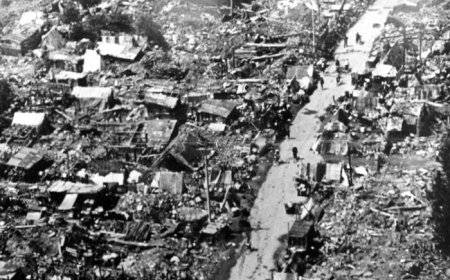
Then, Israeli and US bombs shattered the country’s infrastructure and halted economic activity. Although the bombs are not falling now, there is little money coming in because of Donald Trump’s blockade of the Strait of Hormuz.
Mr Trump said the blockade was costing Iran £370m a day. Analysts agreed that it was estimated to be around £300m.
On Tuesday, 320,000 Iranians submitted job applications through JobVision, the country’s largest online employment platform.
The one-day total shattered all previous records, signalling what Iranian labour economists are calling an “unemployment tsunami”. Seventy per cent of 18-35 year olds are unemployed, according to the Statistical Centre of Iran.
The applications came from every sector: engineers, teachers, retail workers, recent graduates and middle-aged professionals whose companies shuttered during internet blackouts that accompanied war and post-war uncertainty.
Many companies have already announced layoffs. Others simply stopped paying workers and told them to stay home indefinitely – a shadow termination that doesn’t appear in official unemployment statistics.
Jalal, a 32-year-old engineering graduate in Tehran, watches his savings disappear while prices climb hourly.
Before the war, a relative offered to sell him an old blue Nissan Junior for 800 million tomans (£4,500). Last week, the asking price jumped to 1.2bn tomans (£11,400). Two days ago: 1.5bn tomans (£14,350).
“Things are getting more expensive by the hour,” said Jalal. “I don’t have much money. Even if I can find it, I want to wait for prices to get down and they sign a peace deal. But it does not happen.
“My life and young years are just burning in front of my eyes and I cannot do anything about it. There is a feeling of depression among the people I know and the war made it worse. We cannot do or plan anything.”
Jalal participated in January protests over rising prices – demonstrations that preceded the war by weeks. Those earlier grievances seem smaller in comparison now.
“We were not living in heaven before the war, either,” he said. “Now we are in the worst situation under a blockade.”
Some Tehranis have returned to the capital. Others remain displaced, uncertain whether US strikes might resume.
“We are living in a stranded situation, not knowing when they would bomb us again,” said Jalal.
For Afsaneh, a 29-year-old university student outside Tehran, the war and blockade have created a narcotics-style black market for the internet itself.
Classes continue remotely using domestic applications and Iran’s national intranet. But accessing international websites requires purchasing black market data packages.
“Buying [internet] is very similar to buying drugs and alcohol,” Afsaneh said. “We buy this thing called ‘Configure’, which you install on your phone, and it connects to the internet.”
One gigabyte costs roughly 500,000 tomans (£2.80) – half the average daily wage, and 50 times the cost of domestic internet.
Sellers are forced to operate through coded language. At a shop near Afsaneh’s home, customers request a “candy breaker” when they want international internet access.
Other code words circulate through domestic messaging apps, changing frequently to evade detection.
“You can’t say what you want,” she said. “There are codes for it.”
Iran produces some of the region’s most talented programmers and tech entrepreneurs. Now they operate in an information economy where accessing Google requires criminal trade craft.
“People are trying to get back to their normal lives,” Afsaneh said. “But doing that is getting difficult every day.”
The broader economic devastation extends far beyond tech workers and students.
DigiKala, Iran’s largest e-commerce platform, announced 200 job cuts. Steel sector workers face similar layoffs despite company denials. Petrochemical workers were sent on forced leave with no clarity about whether their jobs would remain.
The Tehran Chamber of Commerce has pleaded with businesses to treat job cuts as a “last priority”, appealing to patriotism and “responsibility that goes beyond corporate governance”.
But with revenue vanishing and costs soaring, many employers see no alternative.
Small and medium businesses are faced with especially severe pressure.
Unlike large state-connected enterprises that can access preferential credit or government contracts, smaller operators must survive on revenue alone. When that disappears, they are forced to close.
The government has offered increased unemployment benefits and has discussed tax deferrals, low-interest loans and working capital provision. But implementation has been slow, and amounts are inadequate.
Back in his northern city, Mohsen calculates tomorrow’s choices. Another day’s wages, another decision whether to buy chicken or internet, rice or the ability to communicate.
“Doing that is getting difficult every day,” he said, echoing Afsaneh’s words from 250 miles away.
Names have been changed to protect identities.
[Source: Daily Telegraph]






/file/attachments/orphans/ED_543155_209242.jpg)
