



/file/dailymaverick/wp-content/uploads/2023/10/CovidGrant-1.jpg)






























Starmer leaves Burnham with £5bn defence black hole
PM fails to tell successor how he will find the extra money needed to fund much-delayed investment plan

Sir Keir Starmer has left Andy Burnham with a £5bn black hole after failing to set out his defence spending plans in full.
After a year-long delay, the Prime Minister finally laid out his defence investment plan (DIP) on Tuesday, announcing an additional £15bn on top of his £298bn military spending plans for the next four years.
Most of the money was found by cancelling or delaying projects, including those in energy, infrastructure and military housing.
But in a written statement to Parliament, Rachel Reeves, the Chancellor, also revealed that only £10.3bn of the extra money had been found so far, with the rest to be confirmed “at Budget 2026”.
That leaves Mr Burnham, who is set to become prime minister in weeks, with the immediate challenge of finding a further £4.7bn to fulfil defence spending commitments.
The Telegraph understands Mr Burnham was briefed on the DIP before it was published, but was not told that he would have to find more money to fund it in full.
James Cartlidge, the shadow defence secretary, said: “So much has been punted into the 2030s… Crucially, we don’t know if that money is there. The only money agreed is up to 2030 – everything else depends on the spending plan.”
A Tory spokesman said: “This is a delayed-action poison pill. This is going to be a headache for Burnham and his new chancellor at the end of the spending period.”
At a press conference on Tuesday, Sir Keir said his defence plan equated to the “highest sustained increase” since the Cold War and would mean that Britain would be prepared for war by 2030.
The DIP will allocate £62bn towards Britain’s nuclear weapons programme and more than £8.6bn to build a new type of Tempest fighter jet.
Some £26bn will be spent on upgrading naval bases in Portsmouth, Faslane and Devonport over the next decade, while £11bn will be spent on increasing Britain’s munitions stockpile.
But senior commanders are said to have been left disappointed. One defence source told The Telegraph: “There really isn’t a warm feeling towards the DIP. There isn’t an awful lot of positivity from senior personnel about it.”
Alongside the DIP, military chiefs will be forced to find £10.7bn in “efficiency savings” over the next four years in several areas including infrastructure, “workforce and resourcing” and Civil Service reform.
It is understood they will aim to cut 10 per cent of Civil Service staff as part of this.
Any money saved would then fund training and new military kit for the MoD. No military personnel are expected to be cut as part of the cost-cutting measure.
John Healey, who resigned as defence secretary over the spending plans, criticised the DIP, saying: “Britain will still be spending just 2.7 per cent of GDP in 2030, the date when Nato has warned we could face a Russian attack.
“European security is at stake. The PM has said today that 3 per cent must be the number one priority for the next spending review. We need a target date for 3 per cent and a clear, credible funding plan to meet our Nato commitment for 3.5 per cent on defence by 2035.”
Tan Dhesi, the Labour chairman of the defence select committee, said it was disappointing that there was no clear timeline in the DIP for reaching 3 per cent, let alone a pathway to 3.5 per cent.
Some projects are set to be cut or retired early to save money, including the Army’s fleet of Wildcat helicopters and Storm Shadow missiles.
The military has also scrapped plans for its new £6bn Skynet 6 secure military communications system, once hailed as the Government’s largest space initiative.
Officials are also slowing delivery of the £9bn plan to improve military housing and scrapping upgrades to Meteor air-to-air missiles.
Speaking in the Commons, Dan Jarvis, the Defence Secretary, said all government departments “were asked to contribute 1 per cent of their capital budgets from this year” towards the DIP, while “those with larger resources”, the Department for Transport (DfT) roads budget and Department for Energy Security and Net Zero, were asked to contribute more.
But Labour MPs criticised the plan’s potential impact on roads, with Jonathan Davies saying one “casualty” could be a plan to upgrade junctions on the A38 through Derby.
Hamish Falconer, a Labour Foreign Office minister, criticised “the uncertainty” surrounding the A46 upgrade programme near his Lincoln constituency.
Ms Reeves said the DfT would “provide up to £700m of savings from roads funding” as part of its contribution to the DIP and that more detailed plans would be shared by the autumn.
Inside the package
At sea
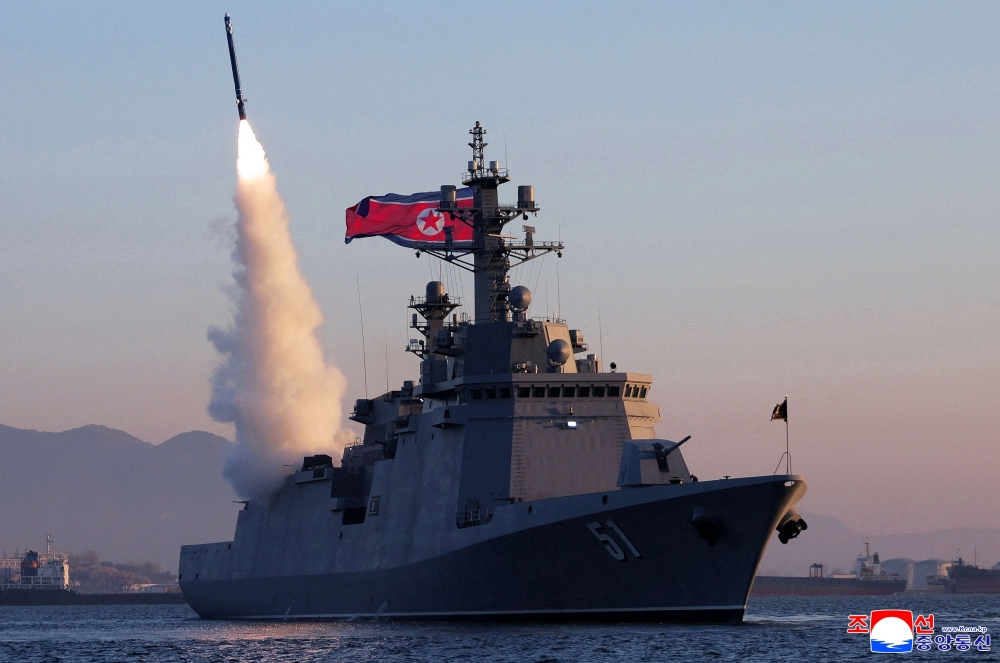
The Royal Navy’s Type 45 destroyers, set to be retired in the 2030s, will be replaced by smaller, cheaper warships at a cost of at least £1.3bn.
Instead of the previously planned Type 83 destroyer, new vessels will be built, including a crewed Common Combat Vessel which will control four drones, the Type 91 missile barge, Type 92 submarine hunter, Type 93 submersible and Type 94 uncrewed radar programme.
Navy chiefs will spend a further £240m on developing a carrier air wing, with early trials planned for jet-powered drones working alongside F-35B stealth jets as part of Project Pantheon.
About £90m will be spent over the next four years on buying additional autonomous mine-hunting vessels as the current fleet of crewed ships is phased out.
More anti-submarine warfare technology to combat Russia, including new sensors, torpedoes, communications systems and AI systems, is also being bought as part of a £540m commitment.
Sir Keir has pledged to invest £330m in protecting critical undersea infrastructure, which will include upgrades to RFA Proteus, a specialist ocean surveillance vessel.
But one of the biggest financial commitments is the £47bn to be spent on the Navy’s submarine fleet.
Over the next decade, £26bn will be spent as part of Project Royal Oak, the biggest naval base upgrade programme “since the Battle of Trafalgar”, said Luke Pollard, a defence minister, with overhauls to Faslane, Portsmouth and Devonport.
Defence chiefs will also spend £13bn on nuclear warheads, £1.7bn on nuclear fuels and £290m on boosting the skilled workforce.
Commitments have also been made to building four new Dreadnought-class submarines, which will carry nuclear weapons and 12 nuclear attack boats as part of the trilateral Aukus deal between Britain, Australia and the US.
In the air
About £750m will be invested in short-range counter-drone technology, while £400m will be spent on replacing obsolete command and control systems and sensor arrays.
In addition, the UK will spend £350m on doubling the number of Sky Sabre air defence missiles operated by the Army, and £490m on developing the DragonFire laser weapons.
The RAF fleet of ageing Typhoon fighter jets will be upgraded through a £1.1bn investment to sustain them into the 2040s.
About £8.6bn is being spent on developing the Tempest sixth-generation fighter jet for the RAF.
The development of drone “wingmen” as part of the collaborative combat aircraft programme has received £300m in funding, while £280m will be spent on upgrading the P-8 Poseidon patrol aircraft used to hunt Russian submarines off the British coast.
Typhoons will receive £1.1bn of funding to extend their lives and £360m will be spent on new jet training systems, which will include a replacement for the Red Arrows’ ageing Hawk fleet.
Twelve F-35A fighter jets, which can carry nuclear bombs, will be purchased. However, The Telegraph understands it is likely that this will take place in early 2030.
On land
Front-line soldiers will receive new drones to prepare them for war.
At least £210m will be invested over four years on low-cost one-way attack drones and long-range one-way munitions.
Apache gunship pilots will be boosted by drone “wingmen” as part of Project Nyx. Up to 24 autonomous aircraft will be delivered by 2030 as part of a £220m investment. They will be able to carry out strike and surveillance missions.
A separate £310m will be spent on replacing the Army’s Watchkeeper system, to develop a new long-range surveillance and reconnaissance drone. A further £400m will be invested in buying a bulk of inexpensive, expendable drones and weapons for the Army, Royal Marines and special forces.
Uncrewed ground vehicles, similar to those used to ferry supplies to the soldiers on the front lines of Ukraine, will receive £150m of funding.
The Army’s reach will be “tripled” through a £190m investment in short-range ballistic missiles by joining the Precision Strike Missile programme with the US and Australia.
About £1.1bn will be spent on Challenger 3, the Army’s new main battle tank, £2.2bn on buying armoured Boxer vehicles, and £500m towards buying a new light-mobility vehicle.
Elsewhere, £680m will be invested over the next four years on the Army’s new medium lift helicopter, while its fleet of Wildcat helicopters will be gutted and retired early.
The Army’s troubled Ajax has been given £1.1bn in an effort to finally get it on the battlefield. The money is understood to have come from a previously agreed pot of £6.3bn for the project.
The armoured vehicle programme is almost a decade later and has been plagued by problems, leaving soldiers vomiting and with permanent hearing damage during field trials.
A damning report earlier this month by Parliament’s public accounts committee branded the vehicles “not fit for purpose”.
[Source: Daily Telegraph]