


/file/dailymaverick/wp-content/uploads/2023/10/CovidGrant-1.jpg)























There’s a new Cold War in the Middle East, and neither side is winning
The US and Iran are alternating between diplomatic momentum, military strikes and ceasefires in a cycle unlikely to produce lasting peace

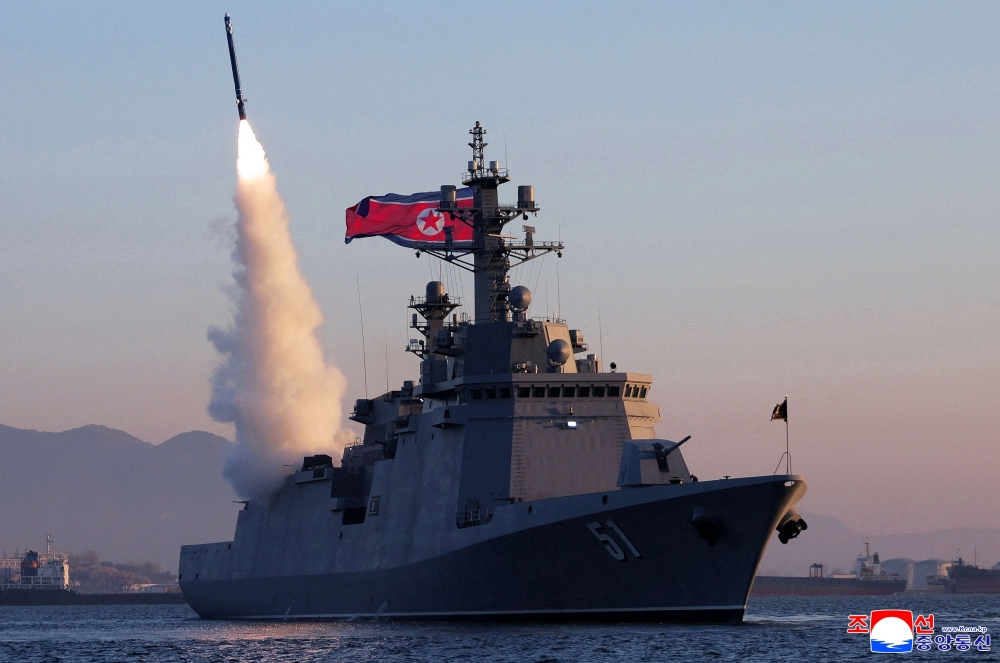
It appeared that the US-Iran Memorandum of Understanding (MoU) was in danger of collapse before the ink was even dry. On Saturday morning, the Islamic Revolutionary Guard Corps (IRGC) struck the MT Kiku, a Panama-flagged vessel travelling along the southern route near the Omani coast in the Strait of Hormuz.
President Trump was livid, ordering two waves of retaliatory air strikesagainst Iranian military targets along the country’s coast. Iran, in turn, retaliated by sending a few drones and missiles towards Kuwait and Bahrain, none of which claimed casualties.
By the weekend’s close, however, Washington and Tehran agreed to halt their fire. US envoys Steve Witkoff and Jared Kushner are expected to meet Iranian officials in Qatar on Tuesday. The US and Iran also agreed to establish deconfliction protocols, both to keep the Strait of Hormuz clear and to ensure instant communication in the event of another flare-up.
As much as Washington and Tehran say they aim to negotiate a comprehensive agreement on the latter’s nuclear programme over the next 60 days, it’s a good bet that the conflict will flare up again.
Although the war has technically been suspended since the first ceasefire was settled on April 8, the prospect of these talks succeeding to a mutually agreeable end point is difficult to imagine given the contrasting interests of the combatants and the different interpretations both sides have of the memorandum they signed earlier in the month.
Instead, we may be reaching a new status-quo in which the US and Iran are no longer at war but still can’t find a formula that would produce a durable peace. The routine since the April 8 pause in hostilities can perhaps be described as a car ride in the mountains with peaks and valleys, albeit travelling along a predictable route.
US and Iranian officials have alternated between diplomatic momentum, diplomatic logjam and tit-for-tat strikes, only to come back down to earth to negotiate yet another pause in the fighting to prevent minor skirmishes from escalating into a full-scale war.
For now at least, both sides prefer to keep the diplomatic path open for three reasons. First, the longer US and Iranian negotiators are talking, the more likely a resumption of full-scale war can be avoided. Second, the pause gives the US and Iranian militaries additional time to rebuild their munitions stocks, repair the damage to their defence infrastructure and prepare for renewed fighting in the event diplomacy falls apart.
Finally, as long as the negotiations are moving in a positive direction, or are at least perceived to be productive, Washington and Tehran can claim progress and stem the economic repercussions associated with ditching diplomacy altogether.
Those economic consequences have been plain for all to see – high fuel prices for Americans at the pump and terrible polls for Trump; and for the Iranian government, a major reduction in government revenue and a further degradation of its conventional military.
How long can this status-quo hold? If talks prove thorny – and there’s no evidence to suggest they won’t – patience may fray. This is especially true for Trump, who has a very limited attention span for prolonged, technically agonising geopolitical negotiations and is on constant alert for any signs of disrespect from the other party at the table.
The Iranians are more patient but don’t like getting pushed around, particularly by the Americans, and have made it abundantly clear on multiple occasions that US pressure tactics, whether in the form of economic sanctions or military strikes, will result in more resistance on their part.
Ironically, the situation doesn’t get any clearer with the MoU, which is a fairly generic document whose wording permits the Americans and Iranians to hold diverging opinions on what it really means.
Take point number five, which states that Iran “will make arrangements using its best efforts” to ensure vessels can pass the Strait of Hormuz with no charge for the next 60 days and institutes a dialogue with Iran-Oman on how to manage the choke point in the future.
The Iranians have taken this to mean that Tehran, and Tehran alone, is responsible for lording over the strait and dictating which route the ships use to transit the waterway. The Trump administration scoffs at Iran’s claim as beyond the letter and spirit of the agreement, arguing that the Strait of Hormuz is an international waterway where all states have freedom of navigation.
It was this dispute that helped kick off the most recent round of hostilities at the weekend, contributing to a 70 per cent reduction in the number of tankers that sailed through the strait over a five-day period.
[Source: Daily Telegraph]