/file/attachments/orphans/20260727_161456_495910.jpg)
















Foreign militias brought in to enforce Iran regime’s crackdown
Footage shows Iraq’s Hashd al-Shaabi patrolling Tehran in what Iranians say ‘feels like an occupation’

Militias brought in from Iraq are patrolling cities in Iran to support depleted Iranian security forces and suppress unrest.
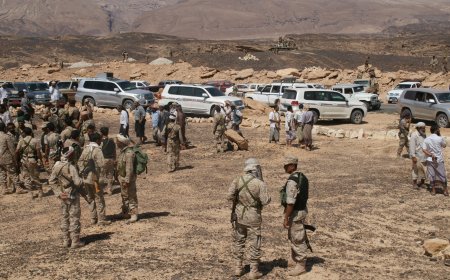
Videos circulating on social media and corroborated by several accounts show members of Iraq’s Hashd al-Shaabi searching vehicles at checkpoints across Tehran and other cities.
They are also enforcing Iran’s strict hijab regulations and patrolling neighbourhoods alongside Iranian security forces, in what locals say feels like an occupation.
One resident of Tehran said: “Right now, for several nights here, there are people at our neighbourhood checkpoint who don’t speak Persian. They wear Hashd al-Shaabi uniforms and only communicate with gestures and a few broken words of Arabic or Persian.”
Iran’s Islamic Revolutionary Guard Corps (IRGC) and police forces have reportedly suffered losses through injuries, desertions and deaths since the US and Israel launched the first attacks of the war in the Middle East, on Feb 28.
The Iraqi forces arrived in limited numbers during the final days of the Iran war, apparently to provide humanitarian aid. However, they have taken on security roles at checkpoints, on night patrols and at government rallies in Tehran.
Hashd al-Shaabi was formed in Iraq in 2014 with Iranian backing to fight Islamic State (IS). It consists mainly of Shia Muslim paramilitary groups, supervised by the IRGC Quds Force. The group has faced accusations of human rights violations and suppressing protesters in Iran.
The deployment of the group in Iran is a reversal of the strategic vision that Qassim Soleimani, who was the IRGC Quds Force commander until he was killed by a US drone strike in 2020.
Soleimani organised Hashd al-Shaabi as Iraq faced collapse under IS advances, marshalling Shia militias into a unified force that would serve as Iran’s primary instrument of influence in Iraq.
The network was designed to project Iranian power outward, suppressing threats in Syria, Iraq and elsewhere while Iran was kept secure. That these forces are patrolling Tehran to control Iranians suggests a failure of that doctrine, with the tools of external dominance necessary for internal control.
Afghan Fatemiyoun fighters – another foreign militia backed by the IRGC – have also reportedly been deployed alongside the Iraqis. Iranian state media has not officially acknowledged the security role of these forces.
A Tehran resident who passes through several checkpoints each day said the presence of foreign forces had fundamentally changed street-level security operations.
He said: “Before it was just Basij [militia] but now the composition has changed. Several people with clear Arabic military uniforms are standing there, and they behave much more harshly. It’s like they have no restrictions. Even the Iranians don’t say anything to them.”
In a video filmed in Azadi Square in Tehran, a man who appears to be a member of the militia says in Arabic: “This is Azadi Square, it’s ours, for Iraq.”
Similar reports have emerged from Karaj, west of Tehran, where residents describe checkpoint personnel communicating through gestures and in Arabic. Residents reported that foreign forces demonstrated less restraint than Iranians, with accounts of rough handling and arbitrary detentions.
The permanent stationing of Hashd al-Shaabi in Iranian cities is an escalation from their previous regional deployments in Syria and Iraq. For many Iranians who lived through the Iran-Iraq war, from 1980 to 1988, the sight of Iraqi forces patrolling Tehran streets carries symbolic weight.
Unlike Iranian security forces, who have families and social ties that create at least some restraint, these foreign fighters have no connection to the population. They do not speak the language or understand local customs, and – according to residents – operate with a level of aggression that even Iranian forces find excessive.
[Source: Daily Telegraph]