























Starmer wants to revolutionise Labour by taking Britain back to the 1970s
The Prime Minister’s plans to entwine the UK economy with Europe echo the recession of 50 years ago

Sir Keir Starmer was supposed to be a modern leader for the 2020s. He was supposed to have shaken off the dead hand of Corbynism and, ultimately, to have rescued Labour from the politics of the 1970s.
Yet, as the Prime Minister finds himself grappling with crises which would look familiar to any politician of that unhappy decade, his approach is now becoming clear.
In a make-or-break speech on Monday to see off a potential leadership challenge, Sir Keir argued that “change cannot come quickly enough” for the British people. He claimed that these were “not ordinary times”.
Beset by strikes, bullied by union barons and crippled by an oil crisis, the Prime Minister has sought inspiration from the 1970s: moving closer to Brussels and nationalising struggling industries.
Ironically for a man attempting to find a new vision for the future, Sir Keir’s approach looks set to haul the nation back 50 years.
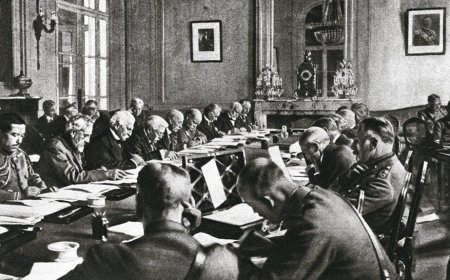
We’ve been here before when it comes to Europe. The UK formally joined the European Communities in 1973, after being rebuffed twice by Charles de Gaulle, the French president. A referendum was then held in 1975 to decide if Britain should continue to be a member, with the “Yes” campaign emerging victorious.
Sir Keir insisted that he wanted to take a “big leap forward” at this summer’s UK-EU summit, bringing Britain closer to the bloc “on trade, the economy, defence and security”.
Importantly, the Prime Minister did not rule out joining the single market or customs union, which Labour previously considered red lines.
He said he would “turn our back on the arguments of the past, not open old grievances, but look forward together to how we make this country stronger and fairer”.
He is not the only one who thinks this way.
Andrew Bailey has signalled his support for the idea of closer ties with the Continent, insisting last week: “We’re an open economy, we do need allies. I think seeking to rebuild trade relations with Europe is a sensible thing to do.”
Rachel Reeves has suggested she would be happy to copy and paste EU rules into UK law, effectively ceding sovereignty to Brussels.
Yet, despite this recent enthusiasm, there is no guarantee it would work in spurring growth. Entwining Britain’s economic fortunes with the Continent 50 years ago did not trigger an immediate economic boom.
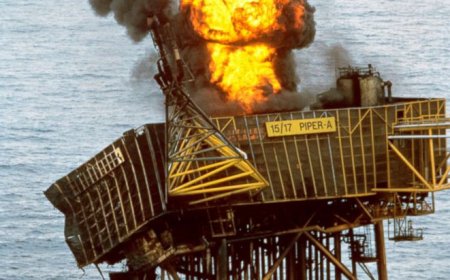
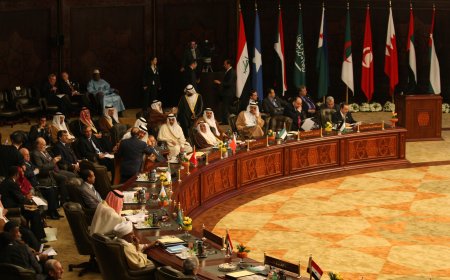
What actually happened was that the UK fell into recession shortly after, during the 1973 oil crisis when Arab oil producers imposed an embargo on countries led by the United States over their support for Israel during the Yom Kippur War.
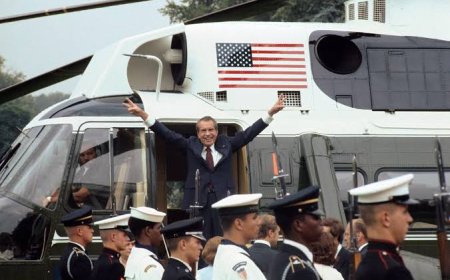
The crisis ultimately contributed to the downfall of Edward Heath’s Conservative government in 1974.
Joining the precursor to the EU meant Britain had to adopt the infamous Common Agricultural Policy, forcing it to move away from relatively cheap food imports that it had enjoyed from Commonwealth countries.
The price of butter became a particular sore point. New Zealand’s exports were much cheaper than the French alternative, but Britain had signed up to be part of the Common Market.
There are echoes of that debate today. Business groups warn the swift implementation of the new sanitary and phytosanitary agreement – under which the UK would effectively replicate large parts of EU agricultural regulations – risks pushing up prices.
They say tighter border checks on non-EU imports could increase the cost of everything from Moroccan cucumbers, Indian mangoes, South African citrus fruits and American sweet potatoes, adding hundreds of millions of pounds to supply chain costs.
Bosses claim this will ultimately worsen living conditions despite Sir Keir’s claim he is “on the side of working people … who worry about the cost of living”.
A different reality
Hard though it may be to believe, those are the words of a man planning the first increase in fuel duty for 15 years, adding 5p per litre of petrol and diesel in stages beginning in September.
Sir Keir’s next big promise was to the nation’s youth, suffering from worsening job prospects as well as rising costs.
Making a pledge with which few would disagree, the Prime Minister said: “Every child should have the opportunity to go as far as their talent or effort takes them.”
The reality so far has proven somewhat different, however.
Unemployment is painfully high, up from 4.2pc at the time of the general election to 4.9pc now. It is set to get worse. Economists at the Item Club predict around 163,000 jobs will be lost this year.
Youth unemployment, at around 16pc, is at its highest in more than a decade.
Much of this has been laid at the door of the Government’s policies.
The ever-higher minimum wage and a new raft of workers’ rights have undermined employers’ ability to take on inexperienced youngsters. The £25bn raid on the National Insurance Contributions paid by employers on their workers’ wages has stymied hiring in labour-intensive industries.
Rather than removing barriers to hiring, Sir Keir promises to “make sure that every young person struggling to find a job will get a guaranteed offer of a job, training or work placement”.
However, the scheme only kicks in for those who have been unemployed for an agonising 18 months.
Union power is back
The driving force behind higher wages and more expensive rights is the union movement, riding high after decades in the political wilderness.
Yet each victory by the unions is met with fresh demands, in a ratchet which Labour ministers seem unable to resist.
Inflation-busting pay rises for junior doctors encouraged fresh waves of strikes, not the harmonious and smooth running of the NHS for which Sir Keir had hoped.
Just as strikes undermined the economy in the 1970s and forced big pay bumps which gave Britain runaway inflation, so the increasing power of the Government and unions in setting wages drives up costs today.
This week, speaking shortly after Sir Keir, his former deputy Angela Rayner popped up at the Communication Workers’ Union conference in Bournemouth to praise their role in shaping the Employment Rights Act, saying “none of it would have happened without you”.
‘Just the first step’
The new laws will strengthen unions by making it easier for members to organise strikes and recruit members – changes its proponents say are “just the first step”. However, business leaders have warned that the new laws are a recipe for higher unemployment.
Unions are also celebrating Sir Keir’s decision to return to another favourite of the 1970s: nationalising industries.
“Public ownership in the public interest, urgent government on the side of working people, making Britain stronger with the hope of industrial renewal, that is a Labour choice,” said the Prime Minister, announcing the nationalisation of British Steel.
Charlotte Brumpton-Childs, GMB national secretary, hailed the decision as vital to the nation.
“British Steel is a nationally strategic asset. It is right the Government does everything in its power to secure its long term future,” she said.
Yet, both the Prime Minister and the GMB’s responses seem to forget what has been behind much of the decline of manufacturing: Britain’s eyewatering energy bills.
Already, before the war in Iran, the UK was facing some of the highest energy costs in the rich world.
The Item Club this week warned that jobs in the manufacturing and construction industries were the most likely to be slashed as these were the most exposed to higher energy and materials costs.
Despite this, the Government has been pushing ahead with its net zero campaign instead of pulling every lever to bolster Britain’s energy supply to keep factories running and bills down.
It has fuelled concerns that, increasingly, British industry will be run on political desire and public funds, as per the 1970s.
All this comes at a time when Britain’s government debt is looking increasingly unstable.
Financial markets charge the UK around 5pc to borrow for 10 years, a level not seen since 2008 and more than any other G7 economy.
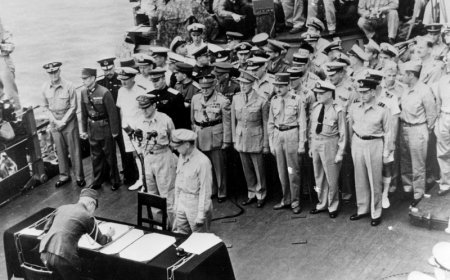
That might seem mild compared to the 1970s, when Britain paid as much as 16pc and was forced into a bailout by the International Monetary Fund (IMF).
However, the debt has ballooned to almost £3tn. As a share of GDP, debt has more than doubled from less than 40pc at the end of that decade to an estimated 95pc this year.
Sir Keir’s insistence on borrowing ever more, as bumper spending increases outpace even his extraordinary tax raids, means the nation is worryingly close to the brink.
Any further shift to the Left risks triggering a debt crisis. Simon French, the chief economist at investment bank Panmure Liberum, fears a repeat of the Liz Truss episode, calling any effort to beef up the state sector further as “a brave pivot”.
“Any such attempt risks having political parallels with the 2022 Mini Budget,” he warns.
Britain might not go cap in hand to the IMF as it did 50 years ago, but debt markets are more powerful than ever in a country with record borrowings and little growth.
Sir Keir might find comfort in reaching back to the policies of the Britain of his childhood. But there is little reason to think that this will satisfy a public already furious with his Government’s performance.
[Source: Daily Telegraph]